
Are Natural Testosterone Boosters Safe? An Honest Ingredient-by-Ingredient Look

Key takeaways
- Most of this category is low-risk at normal doses. Your own prescriptions and your liver decide your actual risk far more than the ingredient list does.
- DHEA does not raise blood pressure — a meta-analysis of randomised trials found a neutral effect. The real signals are lower HDL cholesterol and a PSA rise in men.
- Ashwagandha carries a documented liver-injury signal: jaundice and itching 2 to 12 weeks in, resolving over one to five months. It is contraindicated in cirrhosis and advanced liver disease.
- Fenugreek lowers HbA1c by roughly 0.5–0.9%, enough to stack with insulin or a sulfonylurea. Fadogia agrestis has no human safety trial at all — only rat data.
Most natural testosterone-boosting ingredients are low-risk at normal doses. The real risks sit elsewhere: medication interactions, stacks of eight or more ingredients nobody tested together, and a few outliers whose safety data is rodent-only. One widely repeated claim — that DHEA raises blood pressure — is not what the trials found.
"Natural" and "no side effects" are different claims, and treating them as one is how people get caught out. Fenugreek lowers blood sugar enough to matter if you take insulin. Ashwagandha has a small but documented liver-injury signal. Neither fact makes them dangerous; both make them relevant to specific people.
Which ingredients have the cleanest safety record
Four ingredients come through safety reviews with little to flag at ordinary doses: zinc around 11–30 mg a day, magnesium near the 350 mg supplemental ceiling, vitamin D3 dosed to a measured blood level, and ashwagandha at 300–600 mg of standardised extract.
Reported side effects at these doses are mostly mild stomach upset. The practical caution for all four is arithmetic rather than toxicity: zinc's tolerable upper limit is 40 mg a day and magnesium's supplemental limit is 350 mg, and a multivitamin plus a dedicated capsule plus a fortified protein powder can clear either without any single label looking excessive. The dose-versus-label breakdown in our men-over-40 guide has the full ceiling table.
Ashwagandha's exception: rare but real liver injury
Ashwagandha is the ingredient with the best efficacy evidence in this category, and it carries the one safety signal that most roundups omit entirely.
The NIH's LiverTox monograph records it as generally safe, with no serum enzyme elevations in clinical trials — and also documents clinically apparent liver injury in people taking commercial ashwagandha products. A case series from Iceland and the US Drug-Induced Liver Injury Network describes five patients, mean age 43, who developed jaundice, nausea, lethargy and itching 2 to 12 weeks after starting. The pattern was cholestatic or mixed, the itching and raised bilirubin lasted 5 to 20 weeks, no one developed liver failure, and liver tests returned to normal within one to five months. Chemical analysis confirmed the products contained ashwagandha and no other toxic compound.
Two things follow. First, the risk is real but uncommon against very widescale use, so this is a reason to know the symptoms, not a reason to avoid the ingredient. Second, it is a firm contraindication in one group: LiverTox advises avoiding ashwagandha in anyone with cirrhosis or advanced chronic liver disease, where the rare fatal cases and transplant cases have clustered.
DHEA: the blood pressure claim is wrong, the real flags are elsewhere
DHEA is routinely described as raising blood pressure. A meta-analysis of randomised clinical trials found the opposite — a neutral effect, with systolic pressure moving 0.98 mm Hg (p = 0.56) and diastolic −1.62 mm Hg (p = 0.49). Neither is close to significant.
The genuine signals are different ones. A 12-month randomised trial of 50 mg a day in adults aged 60 to 88 found HDL cholesterol fell (p = 0.01) alongside triglycerides, though longer-term lipoprotein analysis found the HDL effect clearer in women than in men. The distinctly male concern is prostate-specific antigen: in the one-year DAWN trial, five men on DHEA had a PSA rise above 1.4 ng/mL versus two on placebo, and it normalised after stopping in all but one.
So DHEA is not a side-effect-free swap for the milder ingredients, and the reason is lipids and PSA rather than blood pressure. It is the item on this page most worth clearing with a doctor before starting.
The ingredients where the risk is genuinely underreported
Ranked by how far the safety data lags the marketing:
Fadogia agrestis. The weakest evidence base of anything sold in this category. Its testosterone results come from rat studies dosing 18 to 100 mg/kg, and a separate paper examined its mode of cellular toxicity. There is no human safety trial to cite — not a reassuring one, and not an alarming one. Buying it means accepting that nobody has measured what it does in people.
High-dose D-aspartic acid. Six grams a day is the dose that stopped raising testosterone and instead lowered it by around 12.5% in a controlled trial. Reported irritability and faster heart rate sit at the same end of the dose range.
Boron above 20 mg a day. A typical 6 mg dose has little reported downside; irritability, tremor and fertility concerns appear at the high end, which some stacked formulas approach without saying so.
Shilajit with an iron-related condition. Flagged against sickle cell disease, haemochromatosis and thalassaemia, because it can shift iron levels.
Which of your prescriptions might clash
This is the part ingredient-by-ingredient reviews skip: risk depends on what you already take, not on the ingredient alone.
| If you take | Watch | Why |
|---|---|---|
| Insulin or a sulfonylurea | Fenugreek, ashwagandha | Fenugreek lowers HbA1c by roughly 0.5–0.9% in trials — an effect that overlaps some drugs. Added to an agent that already causes hypoglycaemia, it stacks. |
| Metformin or other oral antidiabetics | Fenugreek | Same direction, lower risk. Worth glucose monitoring rather than avoidance. |
| Blood pressure medication | Ashwagandha | Noted to interact. DHEA, despite its reputation, is not the concern here. |
| Blood thinners such as warfarin | Omega-3s, high-dose vitamin E | Additive effect on bleeding time. |
| Any drug, with liver disease | Ashwagandha | Contraindicated in cirrhosis and advanced chronic liver disease. |
| Nothing, but you have a prostate concern | DHEA | PSA elevation is the male-specific signal from trial data. |
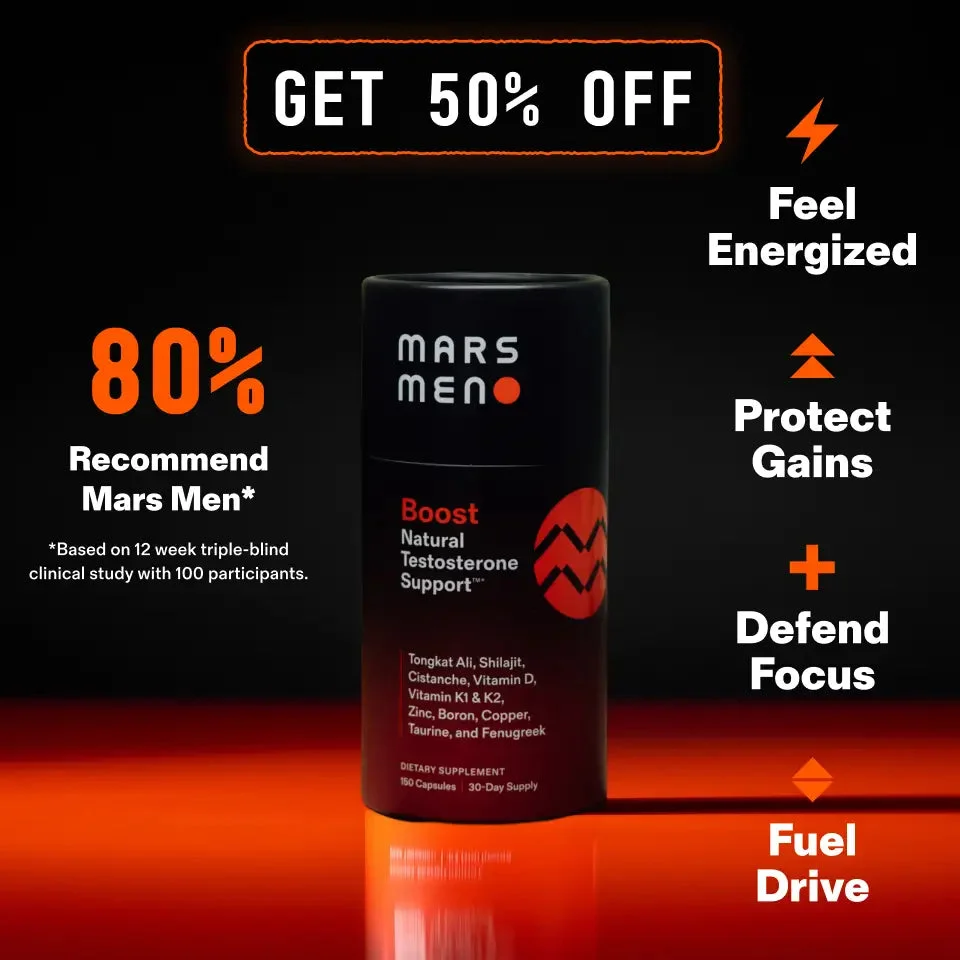
The stacking problem nobody mentions
Every ingredient above was tested on its own. Almost no research tests what happens when eight or eleven of them are taken together daily, which is how most commercial formulas are built.
A long ingredient list is not a safety feature. It is more independent chances of a side effect, more overlapping minerals pushing the same balance in the same direction, and less ability to work out which item caused a problem if one appears. A short list at studied doses is easier to reason about and easier to troubleshoot — one of several reasons the label-reading habits in this pillar matter more than the marketing on the front.
Warning signs that mean stop and call a doctor
Most side effects in this category are mild and pass. These are the ones that are not:
Yellowing of the eyes or skin, dark urine, or persistent itching. The ashwagandha liver-injury pattern, typically 2 to 12 weeks in. Stop and get liver tests.
Unusual fatigue with nausea and appetite loss. Same picture, earlier and vaguer.
Shakiness, sweating or confusion if you are diabetic. Hypoglycaemia from a fenugreek-plus-medication stack.
Chest pain or palpitations. The most frequent reason participants discontinued in the DHEA trial.
New urinary difficulty on DHEA. Worth a PSA check rather than waiting it out.
Decide it in four questions
Do you have liver disease? If yes, ashwagandha is out, and any multi-ingredient formula containing it is out with it. This is the one hard stop on the page.
Do you take insulin or a sulfonylurea? If yes, fenugreek needs a conversation and glucose monitoring before, not after.
Does the label list a per-ingredient dose? If no, you cannot check any of this, and that is what the proprietary-blend format is for. Put it down.
Does it contain fadogia agrestis, boron above 20 mg, or D-aspartic acid at 6 g? If yes, you are paying for the ingredients with the worst risk-to-evidence ratio in the category.
Four noes means the low-risk group — zinc, magnesium, vitamin D, ashwagandha at studied doses — is a reasonable place to start, whether as single ingredients or in a combined formula. Any yes means the next step is your doctor, not your basket. If the underlying question is whether to go the prescription route instead, the comparison with TRT covers that trade-off directly.
What "natural" does and doesn't guarantee
It guarantees a plant or mineral origin. It does not guarantee a tested dose, a known interaction profile, or accurate labelling — the case series above mattered partly because researchers had to chemically verify the capsules contained what the bottle said.
The honest summary: this category is mostly low-risk, the exceptions are specific and knowable, and the biggest determinant of your risk is not the ingredient list but your own prescriptions and liver. Check those two things and most of the uncertainty disappears. The rest of the Men Over 40 pillar and the training and sleep material cover the levers that carry no interaction risk at all.
Frequently asked questions
Are natural testosterone boosters safe to take every day?
For most people the well-studied ingredients — zinc, magnesium, vitamin D, ashwagandha — are low-risk at normal doses. Two caveats matter more than the rest: ashwagandha should be avoided entirely if you have cirrhosis or advanced liver disease, and less-studied ingredients like fadogia agrestis have no human safety trial behind them at all.
Can testosterone boosters raise blood pressure?
DHEA is usually blamed for this, and the trial evidence does not support it. A meta-analysis of randomised clinical trials found a neutral effect on blood pressure — systolic moved 0.98 mm Hg and diastolic −1.62 mm Hg, neither statistically significant. Ashwagandha is the ingredient actually noted to interact with blood pressure medication.
Can ashwagandha damage your liver?
Rarely, but it is documented. The NIH's LiverTox monograph records clinically apparent liver injury in people taking commercial ashwagandha products, and a case series from Iceland and the US Drug-Induced Liver Injury Network described five patients who developed jaundice and itching 2 to 12 weeks after starting. All recovered within one to five months. Stop and get liver tests if you notice yellowing eyes, dark urine or persistent itching.
Do testosterone boosters interact with diabetes medication?
Fenugreek is the one to watch. Meta-analyses put its HbA1c reduction at roughly 0.5 to 0.9%, which overlaps the effect size of some prescription agents. Added to insulin or a sulfonylurea — drugs that already cause hypoglycaemia — the effects stack. That calls for glucose monitoring and a conversation with your prescriber, not necessarily avoidance.
Is it safer to take fewer testosterone-boosting ingredients at once?
Generally yes. Almost all the safety research tests one ingredient at a time, not the eight-to-eleven-ingredient stacks common in commercial formulas. A long list means more independent chances of a side effect, more overlapping minerals, and no way to identify which item caused a problem if one appears.
What's the riskiest ingredient in natural testosterone boosters?
Fadogia agrestis, measured by how far its safety data lags its marketing. Its testosterone results come from rat studies, a separate paper examined its mode of cellular toxicity, and there is no human safety trial to cite in either direction. High-dose D-aspartic acid at 6 g a day is the runner-up, since that dose lowered testosterone by about 12.5% in a controlled trial.